I was five years old when my sisters took me to see my first movie in a theatre. It was about a blood-thirsty monster shark dubbed Jaws. Despite a few nightmares — and an ongoing aversion to deep water and big fish — the experience is one I laugh about now. After all, exposure to age-inappropriate films, music, language and activities is par for the course growing up with siblings who were seven and nine years my senior.
But now as a mother, I can't help worrying about the influence my 12 year-old son Luka is having on Simun, who is nine. I monitor as best I can, but I know Simun sees TV shows and movies that aren’t always age-appropriate. He’s also quick to give up the games and activities he enjoys if his brother deems them too juvenile. And lately, I’ve been hearing a few questionable expressions coming out of his mouth, especially after he’s been hanging out with Luka and his friends.
Dr. Pamela Varedy, a clinical psychologist based in California, works primarily with siblings and families. She says a two- to five-year gap between siblings can be the trickiest. Kids who are closer in age are less likely to have a gap in what’s age-appropriate in terms of media or activities. “And in wider gaps, older siblings can be taught to not let their brothers or sisters do certain things that they do.”
Essentially, almost all younger siblings have the innate desire to mimic their older sibling, especially early in life, says Dr. Varedy. “They want to look like them, act like them and mostly want their approval,” she says. “And sometimes, they are getting more attention from siblings than even their parents so siblings become vital to them for their sense of self.”
The results of a Canadian study on sibling relationships released last year, suggest that healthy interactions with an older sibling may help compensate for the lack of individual attention younger siblings get, especially in larger families. The study’s lead author Jennifer Jenkins, who is a professor in the Department of Human Development and Applied Psychology at the University of Toronto, says siblings really do play a role in how children turn out. “If you’re very close to an older sibling who is aggressive, that’s where you’ll learn your aggression,” she says. “But the same goes if the older sibling is calm and collaborative.”
The sibling experience of one Halifax-based family with kids 11 and 14, proves that brothers can still have an impact on one another even when their interests and social groups are vastly different. Alison DeLory says her youngest son, Eric, was never naturally competitive yet ended up joining a soccer league because it was such an important part of his big brother’s life. “He won’t be a high-level player like his brother Curtis, but it’s still a good experience for him to be on a team,” she says.
In turn, Curtis has found a new interest in scootering after he spent time at the skate park with his little brother. “They still have their own preferences for what they like to do, but they’ve also rubbed off on one another and gained new interests.”
Alison says she hasn't had to worry about negative influences based on the age gap between brothers because her children are so different. “Eric is totally his own kid and isn’t interested in following his brother’s pack of friends,” she says. “He can be exposed to bad language but seems nonplussed by it and doesn’t repeat it.”
Jennifer says the key is not to use a “one-all approach” to parenting siblings because each has individual needs. “Take a sibling group and one of those kids is going to need a lot of monitors and the others won’t need anything,” she says. Instead, she suggests the best thing parents can do to nurture good sibling relationships is to create a positive home atmosphere where the siblings feel equally loved and appreciated.
When Courtney Morgan noticed that her daughter Shae — the third of four siblings ages 9, 7, 4 and 22 months — was suddenly starting to act out, she knew something was up. “When she had one-on-on attention she was delightful,” says Morgan, who is a teacher in Oakville, Ont. “But otherwise there were constant temper tantrums where she’d break things on purpose.”
After consulting several parenting books, she and her husband realized that although some of their children were getting older and more independent, “we couldn't parent as a pool,” says Morgan. On Saturday mornings, for example, Shae and the older kids would get up early to get their own cereal and watch the Disney Channel, she says. “Watching Disney seemed appropriate but Shae wasn’t mature enough for some of those shows featuring high-school students,” says Morgan. “When Ella (the oldest) was four she wasn’t watching those shows.”
Playdates were another issue contributing to Shae’s odd behaviour. “If my oldest invited her friends over, I would let Shae stay with them, but she wasn’t ready to do the same things,” says Morgan. “There’s a big age range so we had to ensure the kids were doing different things.”
Beyond tantrums, what are telltale signs that a younger child is being negatively influenced by an older sibling? Dr. Moshe Ipp, a Toronto pediatrician who has worked at The Hospital for Sick Children for 40 years, says parents should watch for red flags such as inappropriate language not normally used in the house, and unusual comments on violence, sex or relationships in general. “Young children will often repeat stories or comments they have heard from parents or siblings,” he says, adding that exposure to TV shows, video games and the Internet can also be the culprit. “Mostly, common sense should prevail when leaving older and younger children together for any length of time. And when allowed to watch TV, it should be limited by time and content.”
These days, Morgan carefully monitors activities and watches TV with her children on Saturdays to ensure the shows are suitable for all. Her oldest daughter knows she can watch the other shows she likes when she’s alone and appreciates having her friends over now without her younger sister hanging around. “As for Shae, she is so much happier,” says Morgan. “Now that we’re more aware of the issue, we’ve really turned a corner.”
Group Activities: Can They Work?
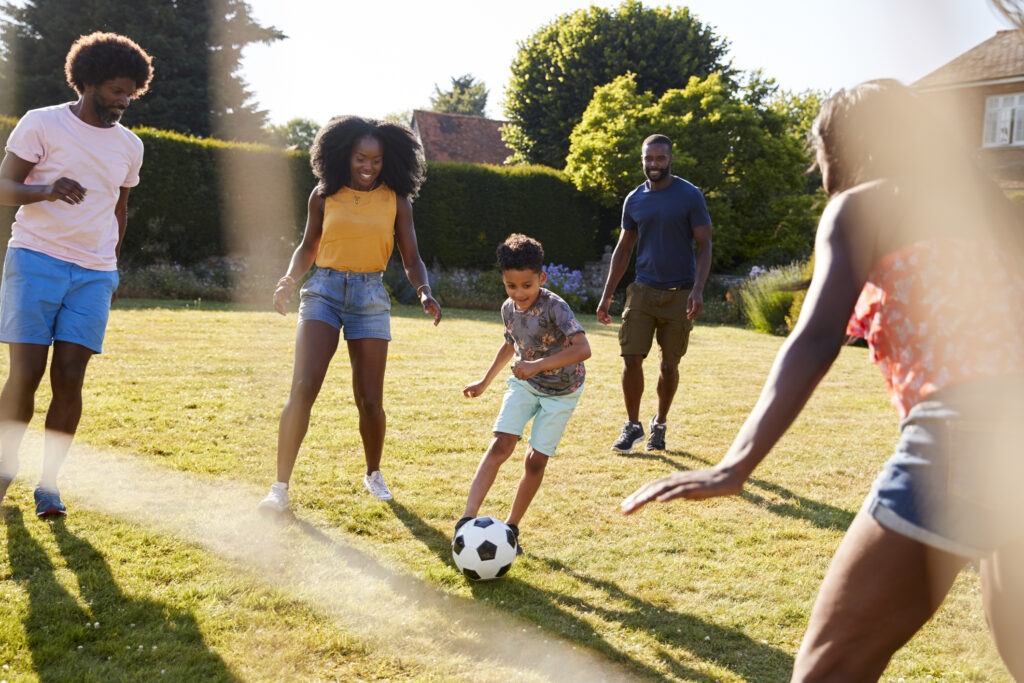
While it may seem like an ideal scenario to put your children in the same programs, it doesn’t always work. Some activities, particularly sports like skiing, hockey and soccer, require a certain level of physical and cognitive ability that younger children may not yet have. Or the siblings may simply have different interests.
Kathy Poletto, a mother of three in Orangeville, Ont., recalls putting her eight- and 10-year-old in the same soccer camp one summer. “My oldest Michael loved it, but Julia hated it so much she actually told her coach she broke her leg so she could get out of going,” says Kathy. “While she liked watching the game, she soon realized the running around and gaming strategies she was having to think about just wasn’t her thing.”
For Oakville, Ont. mother Courtney Morgan, finding an activity like swimming, where each of her four children could be with kids at similar levels, was the perfect solution. “We take swimming lessons at the same time, but each of them has their own class and lane to swim in,” she says. “It’s been super successful and convenient for us.”
Older Siblings as Positive Mentors
We can't always expect older siblings to parent their younger brothers and sisters, they can be positive role models. Psychologist Dr. Pamela Varedy offers some tips on how to nurture those strong sibling bonds.
- Praise your oldest as much as you do your youngest. They were the only ones to ever experience your individual attention before siblings came along and that can make them vulnerable – and extra needy for attention.
- Never compare siblings or pit them against each other by encouraging them to squeal on one another.
- When siblings fight, give them both consequences even if you know who the instigator is. It will build team spirit instead of resentment.
- Give older children more responsibility, which includes entrusting them to enforce rules around appropriate shows, language and activities when they are with their siblings.
- Commend them when they enforce these rules or are particularly helpful and kind to their brothers and sisters.
- Give them some special privileges because they are the oldest (e.g., a bedtime that’s 15 minutes later than their younger counterparts, or the opportunity for some one-on-one time to do some “older” activities)
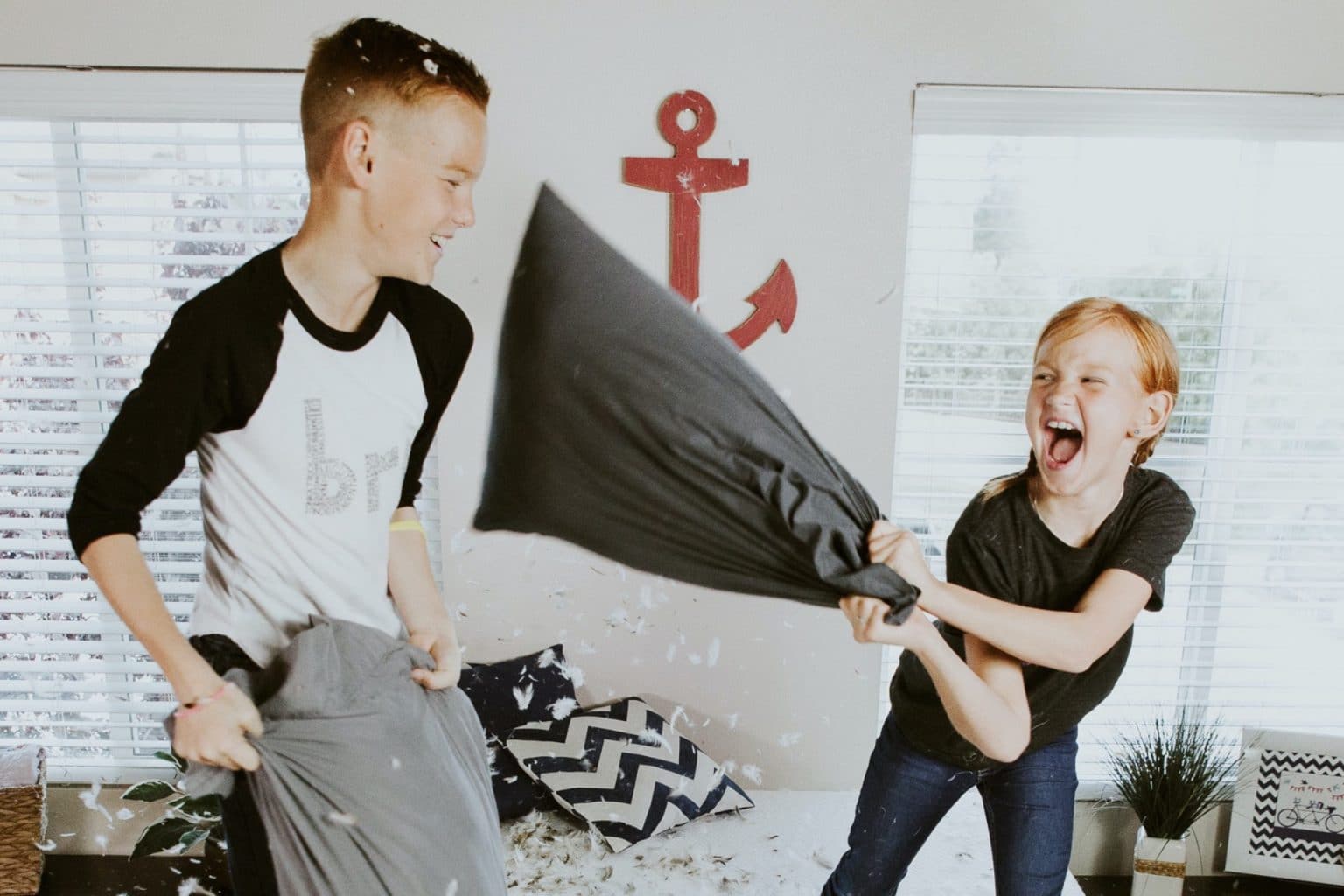
- Don't sweat the occasional bickering and sibling rivalry. “As long as the overall relationship is warm and loyal, siblings picking on each other from time to time is completely normal,” says Dr. Varedy.
Originally published in ParentsCanada magazine, May 2015. Updated in April 2024.